How to Generate More Leads From Your Website: 11 Proven Strategies That Actually Work

Summarize content with
Your website is getting traffic. That's great. But here's the problem: visitors are leaving without giving you their contact information, booking a call, or taking any action that moves them closer to becoming a customer.
You're not alone. The average website conversion rate sits around 2-3%. That means 97 out of 100 visitors just browse and leave. But it doesn't have to be this way.
In this guide, I'll walk you through 11 practical strategies to increase website leads. These aren't theoretical ideas or vague suggestions. These are specific tactics you can implement today to start capturing more leads from your existing traffic.
Why Most Websites Fail to Generate Leads
Before we dive into solutions, let's talk about why most websites struggle with lead generation.
The biggest issue? Speed (or lack of it). Research shows you're 100 times more likely to convert a lead if you respond within 5 minutes. But most businesses take hours or even days to follow up. By that time, your potential customer has already moved on to a competitor who was faster.
The second issue is friction. If it takes someone 10 clicks and 15 form fields to get in touch with you, they won't bother. People want instant answers and easy ways to connect.
The third problem is availability. Your ideal customer might visit your website at 9 PM on a Saturday. If they can't get their questions answered or book a meeting right then and there, you've lost them.
Now let's fix these problems.
1. Answer Questions Instantly with Live Chat
When someone lands on your website with a question, they want an answer now. Not tomorrow. Not in an hour. Right now.
Live chat gives visitors an instant way to get help. But here's the catch: if you're using traditional live chat, someone on your team needs to be available 24/7 to respond. That's expensive and often impossible for small teams.
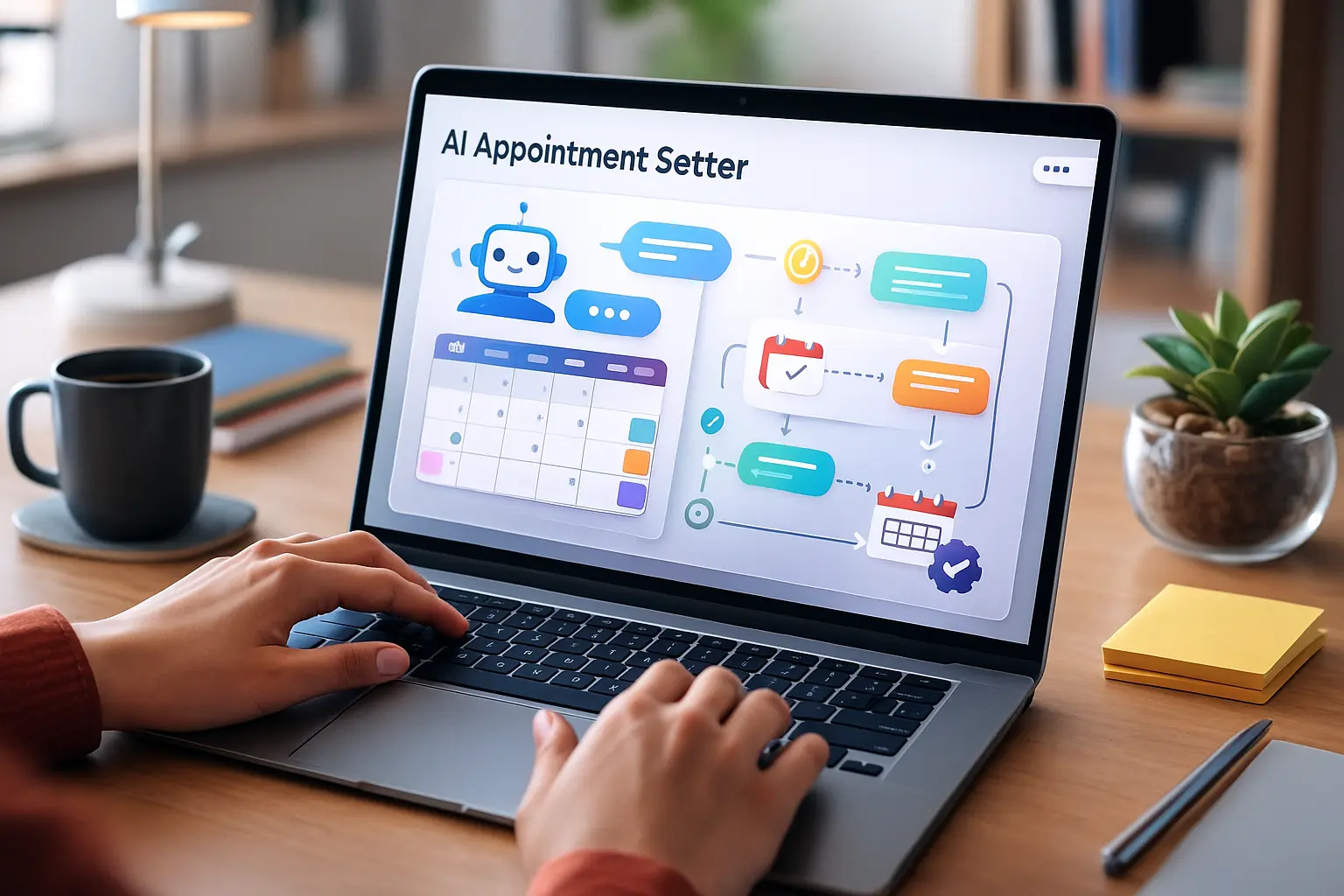
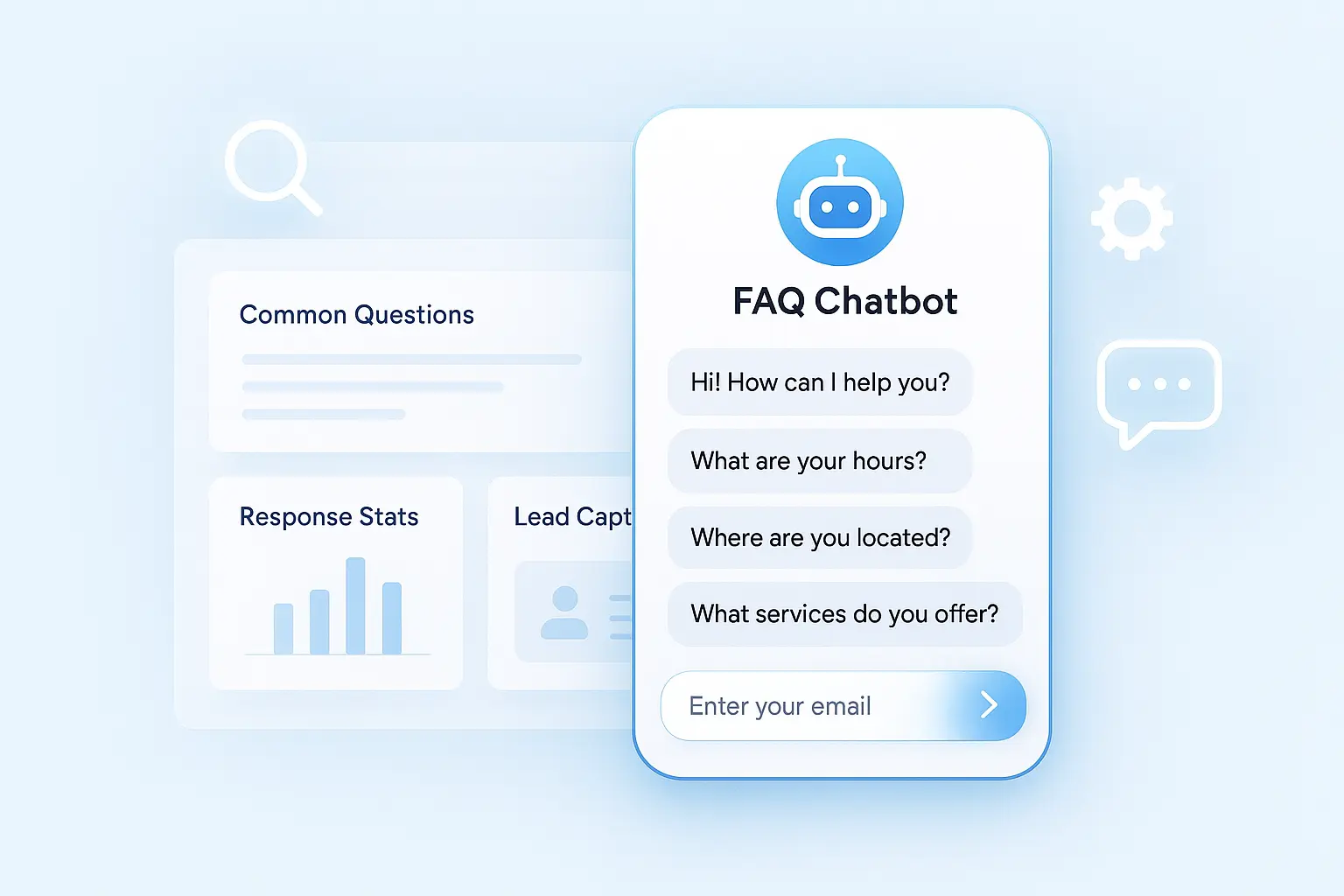
This is where AI chatbots come in. Modern AI chatbots can engage visitors instantly, answer common questions, qualify leads, and even book meetings while you sleep. They work 24/7 without breaks, sick days, or vacations.
The best part? AI chatbots can handle multiple conversations simultaneously. While a human can only talk to one person at a time, an AI can engage with 10, 50, or 100 visitors at once without any drop in quality.
If you want to implement this quickly, tools like LeadJot let you set up an AI chatbot in about 5 minutes. You just paste your website URL, and the AI trains itself on your content. Then it's ready to engage visitors, capture contact information, and book meetings automatically.
2. Reduce Form Friction Dramatically
Long forms kill conversions. Period.
Every additional form field you add decreases your conversion rate. People get tired, suspicious, or simply lazy when they see a form asking for their name, email, phone number, company name, company size, industry, budget, timeline, and their firstborn child's middle name.
For initial lead capture, ask for the bare minimum. Usually that's just a name and email address. You can gather more information later once they're actually interested.
Here's a simple test: count how many form fields you currently have on your lead capture forms. If it's more than 3, you're probably losing leads. Cut it down and watch your conversion rate improve.
Also consider conversational forms. Instead of showing all fields at once, reveal them one at a time through a natural conversation flow. This feels less overwhelming and typically converts better than traditional forms.
3. Make Your Value Proposition Crystal Clear
Within 5 seconds of landing on your homepage, a visitor should understand exactly what you do and why they should care.
Too many websites bury their value proposition under vague corporate speak like "leading provider of innovative solutions" or "empowering businesses through digital transformation." Nobody knows what that means.
Instead, be specific. Answer these questions clearly and prominently:
- What problem do you solve?
- Who do you solve it for?
- What makes your solution different or better?
For example, instead of "innovative communication solutions," try "respond to customer questions 10x faster with AI-powered chat." See the difference?
Put your value proposition in the headline of your homepage. Make it big, bold, and impossible to miss. Then immediately back it up with a clear call to action.
4. Use Strategic Exit-Intent Popups
Yes, popups can be annoying. But when used correctly, they work.
An exit-intent popup appears when someone is about to leave your website. It's your last chance to capture that lead before they're gone forever.
The key is offering something valuable in exchange for their contact information. This could be:
- A free consultation or website audit
- An industry report or case study
- A discount or special offer
- A useful tool or template
Make the offer specific and relevant to what they were looking at. If someone was reading a blog post about SEO, offer them an SEO checklist. If they were browsing your pricing page, offer a demo or consultation.
Keep the popup simple with minimal form fields (remember, friction kills conversions). And make sure it's easy to close for people who genuinely aren't interested.
5. Add Lead Magnets to High-Traffic Pages
A lead magnet is a valuable piece of content you give away for free in exchange for contact information.
The mistake most businesses make is only putting lead magnets on their homepage or a dedicated landing page. But your blog posts, resource pages, and other high-traffic pages are perfect opportunities to capture leads.
Look at your analytics and identify your top 10 most visited pages. Then add relevant lead magnets to each one.
For example:
- On a blog post about email marketing, offer an email template library
- On your pricing page, offer a calculator or ROI estimator
- On your about page, offer a company case study or success story
- On product pages, offer a free trial or demo
The lead magnet should be directly related to the content on that page. Someone reading about email marketing probably doesn't want your unrelated eBook about social media.
6. Optimize Your Website Speed
This might seem obvious, but slow websites kill conversions. For every additional second your page takes to load, your conversion rate drops by about 7%.
Run your website through Google PageSpeed Insights right now. If your score is below 70, you're losing leads due to slow load times.
Common speed issues include:
- Oversized images (compress them)
- Too many plugins or scripts (remove what you don't need)
- Poor hosting (upgrade if necessary)
- Lack of caching (implement browser and server caching)
Fixing website speed isn't glamorous, but it's one of the highest ROI improvements you can make for lead generation.
7. Create Dedicated Landing Pages for Each Traffic Source
Sending all your traffic to your homepage is a mistake. Different visitors come to your site with different needs and expectations.
Someone clicking a Facebook ad about "automated appointment scheduling" should land on a page specifically about appointment scheduling, not your generic homepage where they have to hunt for that information.
Create dedicated landing pages for:
- Each paid advertising campaign
- Each email newsletter topic
- Each social media promotion
- Different audience segments
Each landing page should have a singular focus with one clear call to action. Remove navigation menus and other distractions. The goal is to guide visitors toward one specific action: filling out the form, booking a call, or starting a trial.
8. Implement Social Proof Strategically
People trust other people more than they trust your marketing claims. Social proof (testimonials, reviews, case studies, logos of clients) builds trust and credibility.
But don't just dump all your testimonials on one "testimonials" page that nobody visits. Place social proof strategically throughout your website:
- Add customer logos to your homepage
- Include a relevant testimonial next to each call-to-action form
- Show real-time notifications of recent signups or purchases
- Display review ratings prominently
- Feature specific case studies on service or product pages
Make your social proof specific. Instead of "Great service!", use testimonials that mention specific results: "We increased our qualified leads by 215% in the first month."
Numbers and specific outcomes are far more convincing than generic praise.
9. A/B Test Everything Important
You can't improve what you don't measure. A/B testing lets you systematically improve your conversion rates by testing different versions of key elements.
Start with the highest-impact elements:
- Headlines on your homepage and landing pages
- Call-to-action button text and colors
- Form length and fields
- Value proposition messaging
- Images and videos
Run one test at a time so you know exactly what caused any change in conversion rates. Let each test run long enough to get statistically significant results (usually at least 100 conversions per variation).
Don't just test random things. Form a hypothesis based on user behavior or feedback, then test it. For example, "I think fewer form fields will increase conversions" is a testable hypothesis.
10. Make Contact Options Obvious and Multiple
Some people prefer filling out forms. Others want to call. Some like live chat. Others prefer email or even text messages.
Give people multiple ways to contact you and make them all obvious. Your contact information should be easy to find on every page.
At minimum, include:
- A prominent "Contact" or "Get Started" button in your navigation
- Your phone number in the header (click-to-call on mobile)
- A contact form that's easy to find
- Your email address
- Live chat or chatbot functionality
Don't make people hunt for your contact information. If they have to search for a way to reach you, many will simply give up and go to a competitor's site.
11. Follow Up Fast (Really Fast)
This is where most businesses fail. You've done everything right: optimized your website, captured the lead, got their contact information. Then you wait 3 hours (or 3 days) to follow up.
By that time, they've already talked to three of your competitors. Game over.
The solution is automation. Use tools that immediately trigger follow-up actions when someone submits a form:
- Automatically send a confirmation email within seconds
- Instantly notify your sales team via Slack or text
- Trigger an automated SMS confirming their request
- If possible, use AI to engage them immediately and book a meeting right away
Remember that stat from earlier: you're 100x more likely to convert a lead with a 5-minute response compared to a 30-minute response. Speed matters more than almost anything else in lead generation.
This is exactly why chatbots are becoming so popular. An AI chatbot can instantly engage a visitor, answer their questions, and book a meeting in their calendar before they ever leave your website. No waiting, no delays, no lost opportunities.
The Fastest Way to Start Capturing More Leads Today
If you're looking for the quickest path to more website leads, I'd recommend starting with an AI chatbot. It addresses multiple problems at once: instant response time, 24/7 availability, automatic lead qualification, and meeting booking.
LeadJot is built specifically for this. Here's why it works so well:
Setup takes 5 minutes, not 5 days. You literally paste your website URL, and the AI trains itself on your content. No coding, no complicated integrations, no technical headaches.
It saves you serious money. Hiring human agents to respond 24/7 would cost you $2000+ per month. LeadJot replaces that cost entirely while actually being faster and more consistent.
It books meetings automatically. The AI doesn't just chat with visitors. It qualifies them based on your criteria, captures their contact information, and books meetings directly into your calendar. All while you're sleeping, in meetings, or focusing on other parts of your business.
It works everywhere. Website, Instagram, WhatsApp, Facebook Messenger. Your leads are coming from multiple channels, and LeadJot meets them wherever they are.
The best part? There's a 7-day free trial so you can test it risk-free. Most people see results within the first 48 hours.
If you're serious about increasing your website leads, this is the lowest-effort, highest-impact change you can make right now. Try LeadJot free for 7 days and see how many leads you're currently missing.
Putting It All Together
Increasing website leads isn't about implementing one magic trick. It's about systematically removing friction, building trust, and making it incredibly easy for visitors to take the next step.
Start with the quick wins:
- Add live chat or an AI chatbot for instant engagement
- Reduce form fields to the absolute minimum
- Make your value proposition clearer
- Speed up your website
- Follow up faster (ideally instantly)
Then move on to the more involved strategies like creating dedicated landing pages, implementing A/B tests, and strategically placing social proof.
The businesses that win at lead generation are the ones that respond fastest, make it easiest for visitors to connect, and systematically test and improve their conversion funnel.
Your website traffic is too valuable to waste. Start implementing these strategies today and watch your lead numbers climb.